
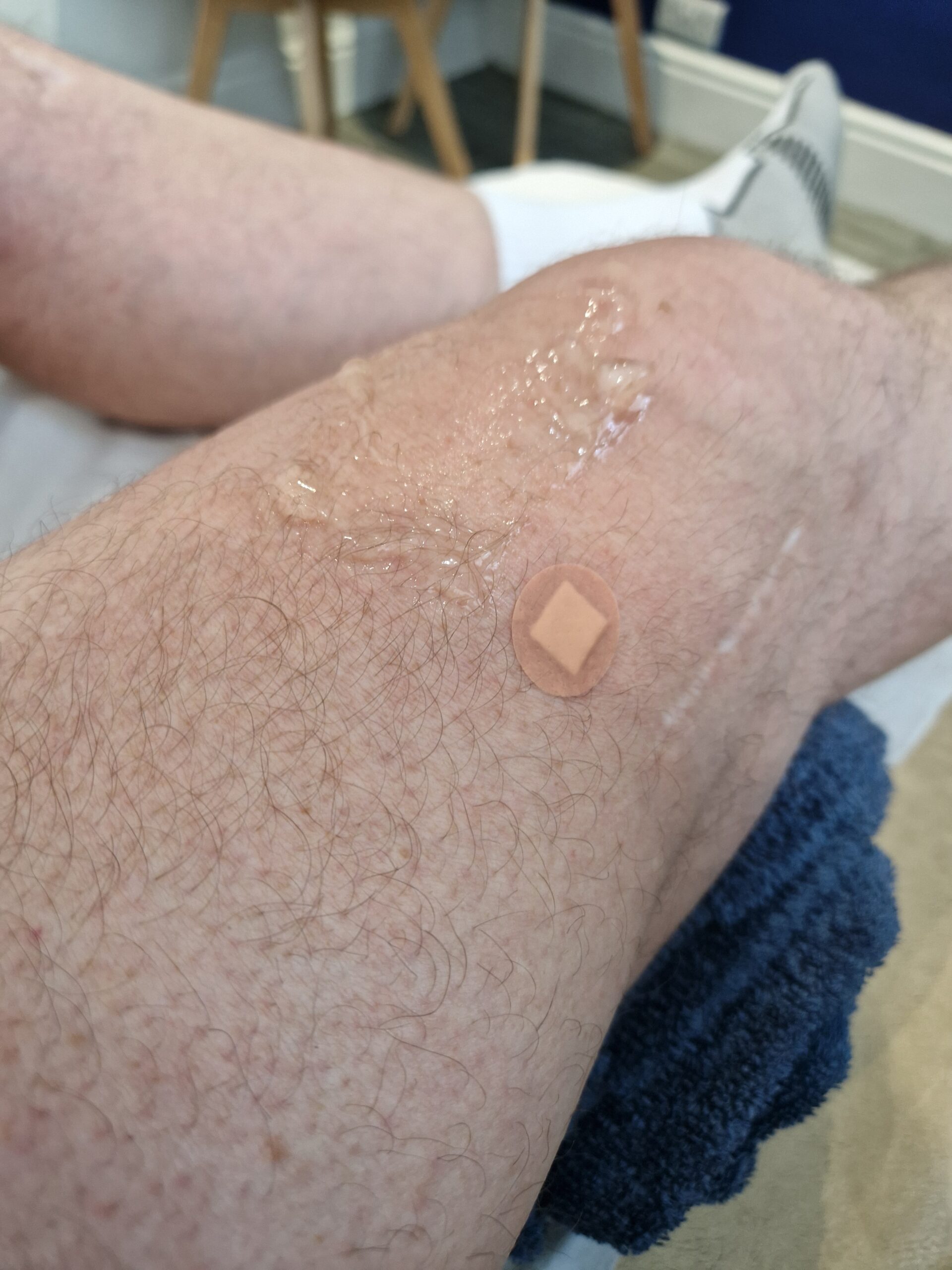
Knee Injections Sheffield – Treatment Options
Exploring treatments for knee pain, stiffness and osteoarthritis | Sheffield Therapy Centre
If you’re looking for knee injections in Sheffield, Sheffield Therapy Centre offers specialist assessment and injection therapy for selected patients experiencing knee pain and osteoarthritis. Perhaps walking, exercising or enjoying everyday activities has become increasingly difficult?
At Sheffield Therapy Centre, we offer specialist assessment and injection therapy for selected patients experiencing knee pain and osteoarthritis.
There are several types of knee injection, each working in a different way. Options include corticosteroid (steroid) injections, hyaluronic acid injections and, from January 2027, ultrasound-guided Arthrosamid® hydrogel injections.
The most appropriate treatment depends on your symptoms, medical history, previous treatments and individual goals.
In this guide, we explain the different types of knee injections, what they are designed to do, how long their effects may last and who might benefit from discussing them with a specialist.
Our aim is to help you make an informed decision about managing your knee pain and maintaining your mobility.
Knee Injection Treatment Options in Sheffield
- Steroid Knee Injections (Corticosteroids)
Best suited to: People experiencing a painful, irritated knee, particularly when inflammation is contributing to their symptoms.
A corticosteroid injection aims to reduce inflammation within the joint and provide short-term relief from knee pain.
It may be considered when:
- Your knee osteoarthritis has flared up.
- Pain is affecting your sleep, walking or everyday activities.
- Inflammation is contributing to discomfort and restricted movement.
- Temporary pain relief may help you participate more effectively in physiotherapy and rehabilitation.
What to expect
Relief may begin within a few days. The benefits are generally short-term, with NICE indicating that corticosteroid injections for osteoarthritis may provide relief for up to 10 weeks. Results vary from patient to patient.
Steroid injections are not a cure for osteoarthritis and do not reverse joint damage. They are generally considered as part of a wider management programme.
- Hyaluronic Acid Knee Injections
Best suited to: Selected people with symptomatic knee osteoarthritis who wish to explore non-steroid injection options.
Hyaluronic acid occurs naturally in joint fluid and contributes to the lubrication and cushioning properties of the joint.
Hyaluronic acid injections aim to improve joint comfort and movement in people experiencing osteoarthritis symptoms.
They may be considered when:
- You have persistent knee pain or stiffness.
- You wish to explore a non-steroid injection option or are clinically unsuitable for steroids.
- You have discussed other conservative treatments, including exercise and physiotherapy.
- An individual assessment suggests that this treatment is worth considering.
What to expect
Over the next 2 to 3 weeks following injection, you may notice a reduction in your symptoms. The joint can feel much better lubricated for around 6 to 9 months, although results vary considerably.
Your clinician can discuss the available evidence, potential benefits, limitations and alternative treatments before you make a decision.
- Combined Steroid and Hyaluronic Acid Knee Injections
Best suited to: Selected people with knee osteoarthritis who have significant symptoms and may benefit from considering a combined injection approach.
Some injection preparations combine corticosteroid and hyaluronic acid.
The corticosteroid component aims to provide earlier anti-inflammatory relief, while the hyaluronic acid component is intended to provide additional joint comfort.
This approach may be considered when:
- Your knee is particularly painful or inflamed.
- You have ongoing osteoarthritis symptoms.
- Other treatments have not provided sufficient relief.
- An individual clinical assessment suggests that the combination may be appropriate.
What to expect
The intention is to address inflammation and joint symptoms through a combined approach. However, individual responses vary, and the evidence supporting combination injections should be considered carefully.
Your clinician will explain the potential benefits, limitations and suitability of this treatment.
- NEW FROM JANUARY 2027: Arthrosamid® Knee Injections in Sheffield
Ultrasound-guided treatment for selected people with knee osteoarthritis
One of the newer developments in the management of knee osteoarthritis is Arthrosamid®, an injectable hydrogel designed to help manage symptoms in selected patients.
At Sheffield Therapy Centre, we are preparing to introduce ultrasound-guided Arthrosamid® knee injections from January 2027.
What is Arthrosamid®?
Arthrosamid® is a non-biodegradable hydrogel injected into the knee joint. It is designed to integrate with the synovial tissue within the joint capsule.
Unlike traditional steroid injections, Arthrosamid® is intended as a longer-term treatment approach. It may help reduce pain and improve function in some people with symptomatic knee osteoarthritis.
Ultrasound guidance allows the clinician to visualise the joint and guide accurate needle placement during the procedure.
Who might benefit from discussing Arthrosamid®?
It may be worth exploring for carefully selected people who:
- Experience persistent knee pain despite exercise, physiotherapy or other conservative treatments.
- Have symptomatic knee osteoarthritis affecting their mobility and quality of life.
- Would like to discuss alternatives to repeated steroid injections.
- Want to explore non-surgical treatment options before considering knee replacement surgery.
How long can Arthrosamid® help?
Some clinical studies have reported improvements in knee pain and function lasting several years in certain patients.
However, individual responses vary and longer-term evidence is still developing. Arthrosamid® does not regrow cartilage, reverse arthritis or guarantee that knee replacement surgery will be avoided.
It is also important to understand that Arthrosamid® is a permanent, non-biodegradable implant. Potential risks, alternatives, benefits and limitations must be discussed before proceeding.
Careful patient selection, clinical assessment and appropriate infection-prevention measures are essential.
Is Arthrosamid® suitable for everyone?
No. Arthrosamid® is not appropriate for every person with knee osteoarthritis.
A detailed assessment is necessary to consider the severity of your symptoms, medical history, previous treatments and individual circumstances.
There is also the possibility that treatment may not provide meaningful improvement. You can read more about it here https://arthrosamid.com/knee-pain
At Sheffield Therapy Centre, we believe in an individual approach rather than assuming that one injection is right for everyone.
Which Knee Injection Is Right for Me?
There is no single injection that is best for everybody.
The most appropriate option depends on several factors, including:
- The severity and nature of your knee pain.
- Whether inflammation is contributing to your symptoms.
- The extent of your osteoarthritis.
- Your medical history and previous treatments.
- Your mobility and activity goals.
- The potential benefits and risks of each treatment.
Exercise, appropriate physiotherapy and lifestyle management remain important parts of osteoarthritis care.
An injection may form part of a wider treatment plan, rather than being a replacement for rehabilitation.
Knee Injection Assessments in Sheffield
At Sheffield Therapy Centre, we take the time to understand your knee problem and discuss the treatment options available.
Your assessment will be led by Sarah Bittles-Kincaid, our Expert Orthopaedic Physiotherapy Practitioner.
With extensive experience in musculoskeletal care, Sarah can assess your symptoms, discuss suitable treatment options and help you make an informed decision about your next steps.
Whether you are considering a steroid injection, hyaluronic acid or the newer Arthrosamid® treatment, an individual assessment is the starting point.
Interested in exploring knee injection treatment in Sheffield?
You can arrange an appointment with Sheffield Therapy Centre to discuss your symptoms and find out whether injection therapy may be appropriate.
BOOK YOUR KNEE ASSESSMENT – SHEFFIELD THERAPY CENTRE
Frequently Asked Questions About Knee Injections
- Where can I get a knee injection in Sheffield?
Sheffield Therapy Centre offers specialist knee pain assessments and injection therapy in Sheffield. Treatment options are discussed following an individual clinical assessment to establish which approach, if any, may be appropriate.
- Which knee injection is best for osteoarthritis?
There is no single best injection for everyone. Corticosteroid, hyaluronic acid and Arthrosamid® treatments have different properties, evidence bases and potential risks. Your symptoms, medical history and previous treatments will help determine which options are appropriate to discuss.
- How long does a steroid knee injection last?
Steroid injections can provide short-term relief from knee pain associated with inflammation. NICE advises that relief for osteoarthritis generally lasts between 2 and 10 weeks, although individual experiences vary. Some last longer and some have no improvement at all.
- What is an Arthrosamid® knee injection?
Arthrosamid® is an injectable, non-biodegradable hydrogel intended to help manage symptoms of knee osteoarthritis. It integrates with the synovial tissue within the joint capsule and is designed as a longer-term treatment approach.
- Can knee injections avoid the need for a knee replacement?
Some people may manage their symptoms with non-surgical treatments for a period of time. However, injections cannot guarantee that surgery will be avoided. If osteoarthritis significantly affects your quality of life, surgical options should remain part of an informed discussion with an appropriate specialist.
- Do I need a GP referral for a knee injection at Sheffield Therapy Centre?
You can contact Sheffield Therapy Centre directly to arrange an assessment. A GP referral is not routinely required for a private appointment, although relevant medical information may be requested before treatment.
Take the Next Step Towards Managing Your Knee Pain
Living with knee pain and osteoarthritis can be frustrating, particularly when it begins to affect your everyday activities.
There are several treatment options available, and understanding the differences can help you make an informed decision.
If you are considering knee injection therapy, contact Sheffield Therapy Centre to arrange an assessment with Sarah Bittles-Kincaid, Orthopaedic Physiotherapy Practitioner.
Let’s explore the options available to help you stay mobile and active.
Make an appointment for an expert Orthopaedic Physiotherapy Consultation here: https://sheffieldtherapycentre.co.uk/
Treatment suitability and results vary. All injection procedures require appropriate clinical assessment. Potential benefits, risks and alternatives will be discussed before treatment. No injection can guarantee pain relief or prevent the progression of osteoarthritis.